
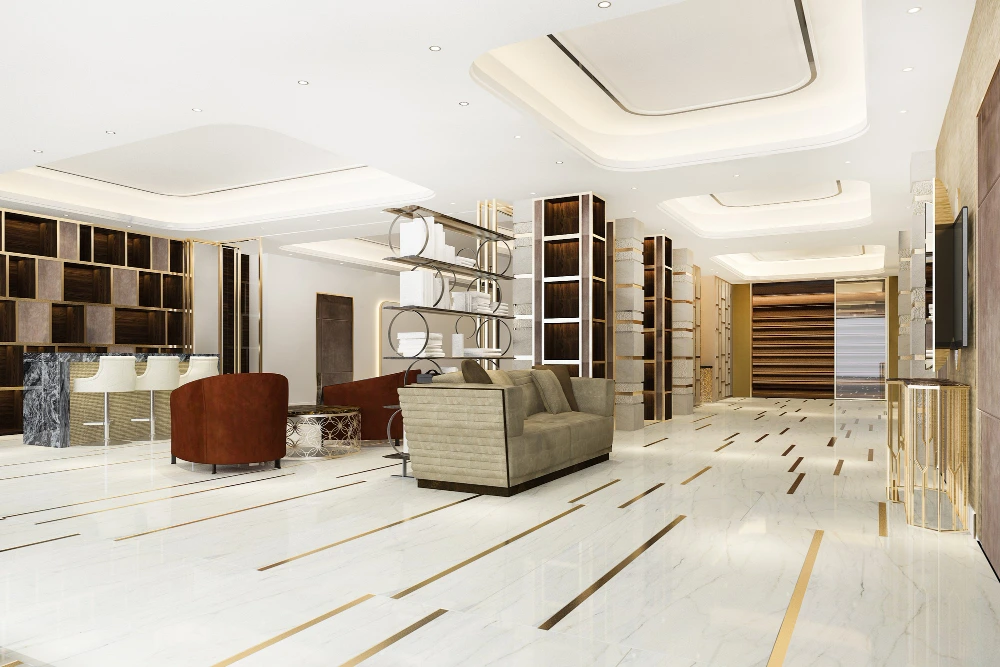
Dubai’s five-star hotels operate at a standard that tolerates no visible shortcuts and nowhere is that standard more uncompromisingly applied than in furniture specification. This blog breaks down the exact specs that luxury hotel procurement teams in Dubai treat as non-negotiable: from structural grades and fire compliance to finish quality, comfort engineering, and the supplier evaluation criteria that separate credible partners from costly risks. Essential reading for developers, procurement teams, and interior designers working in Dubai’s upper-upscale hospitality sector.
Dubai’s five-star hotels exist in a market where guests have experienced the best properties in the world and carry those expectations with them. A piece of furniture in a JBR resort suite or a DIFC business hotel is not evaluated in isolation it is silently compared to every equivalent piece the guest has encountered in Singapore, Paris, New York, and London. For procurement teams and interior designers working at this tier, luxury hotel furniture specifications are not aspirational guidelines. They are the baseline below which no piece may fall, regardless of budget pressure, timeline constraint, or supplier persuasion.
This guide documents the specifications that Dubai’s five-star hotels treat as inviolable the structural standards, finish requirements, compliance certifications, and operational durability benchmarks that define what it means to furnish at the luxury tier in one of the world’s most demanding hospitality markets.
Why Furniture Specifications Matter More in Dubai Than Almost Anywhere
Dubai’s five-star properties operate at occupancy rates that would stress most European hotels. Peak season brings near-100% occupancy sustained across weeks, with multiple room turnovers per day in some configurations. Every piece of commercial hospitality furniture in a Dubai five-star is subjected to this volume of use continuously not just guest-facing pieces, but operational equipment too. The specification of Housekeeping Trolleys for High-Volume Dubai Hotels is as non-negotiable as the guest room headboard: trolleys that fail mid-shift, jam in corridors, or deteriorate visibly undermine operational efficiency and, eventually, the guest experience they support.
The design context in Dubai’s luxury tier is also exceptionally demanding. International hotel brands commission globally recognised designers to create interiors that are visually distinctive, culturally resonant, and commercially differentiated. This creates a brief environment where Creative Furniture Ideas must be translated into manufacturable, compliant, operationally durable pieces without losing the design intent in the specification process. The procurement challenge is not just meeting a quality floor; it is executing a complex design vision within specification parameters that protect the investment’s long-term value.
Effective Furniture Planning for Modern Hotels in Dubai’s five-star segment requires procurement teams to hold two things in tension simultaneously: absolute adherence to quality and compliance specifications, and the flexibility to accommodate the rapid design evolution and last-minute client changes that characterise luxury hotel projects. The teams that do this well have internalised the specification standards so deeply that they can evaluate a new design proposal against compliance requirements in real time not after a three-week review process.
Structural Specifications: The Foundation That Cannot Be Compromised
The structural specification of premium hotel interior furniture at Dubai’s five-star tier begins with frame materials and construction methods that are selected specifically for high-cycle, high-load commercial use. Here is what non-negotiable structural specification looks like in practice:
Timber Frames
Kiln-dried hardwood typically beech, oak, or rubberwood at a minimum, with walnut and teak reserved for exposed structural elements is the standard for five-star case goods and upholstered furniture frames. Moisture content must be certified to 8–12% at the time of manufacture to prevent subsequent warping, joint failure, and finish cracking as the piece acclimatises to Dubai’s climate-controlled but variable humidity environment. Joints must be mortise-and-tenon or double-dowel construction with structural adhesive; staple-only joints are not acceptable in five-star specification.
Metal Frames
Where metal frames are specified common in dining chairs, lounge seating, and occasional tables 1.2mm minimum wall thickness steel tube or 6061-series aluminium alloy is the starting point for five-star hotel furniture quality standards. All welds must be continuous, ground smooth, and free from porosity; spot welds visible at stress points are a reliable indicator of commercial-grade rather than luxury-grade manufacturing. Powder-coat finishes must be applied to a minimum 60–80 micron dry film thickness to resist the combination of cleaning chemical exposure, UV, and physical abrasion that Dubai hotel furniture sustains daily.
Upholstery Construction
The seating comfort and durability standard for Dubai five-star specification requires high-resilience polyurethane foam at a minimum density of 40kg/m³ for primary seating surfaces and 35kg/m³ for secondary contact surfaces. Pocket-spring or sinuous spring systems are specified for sofas and large lounge chairs where foam alone cannot maintain the required support profile across the volume of use a Dubai hotel generates. Webbing suspension must be heavy-duty rubber or polypropylene with minimum 72kg/m rated tension. These are not premium options they are the baseline for any piece entering a five-star Dubai property.
Fire Safety Compliance: Non-Negotiable in Every Category
Dubai Municipality’s fire safety requirements for hospitality furniture are among the most stringent in the region, and no piece of Hospitality Furniture may be installed in a Dubai five-star hotel without appropriate fire compliance certification. This is not a best-practice recommendation it is a legal requirement with significant consequences for non-compliance, including project holds, removal orders, and insurance liability implications.
Foam and Padding Fire Standards
All foam and padding materials used in five-star hotel upholstery in Dubai must comply with CRIB 5 (BS 5852 Source 5) ignition resistance testing as a minimum. For public areas with high occupancy potential lobby seating, restaurant chairs, lounge furniture CRIB 7 (BS 5852 Source 7) compliance is increasingly required by international brand standards operating in Dubai. Procurement teams must obtain physical test certificates not supplier declarations confirming the specific foam batch and fabric combination used in production has passed the applicable test.
Fabric and Upholstery Fire Standards
Cover fabrics must comply with BS 7176 (Medium Hazard) at minimum for hospitality seating applications. For curtaining and wall upholstery, BS 5867 Part 2 Type B applies. Contract fabric suppliers operating at Dubai’s five-star tier provide fire test certificates as standard; retail-grade fabrics specified without fire certification are not compliant for commercial hospitality use in Dubai regardless of their visual quality. This is one of the most common compliance failures in projects where design intent outpaces procurement rigour.
Timber and Finish Fire Standards
Exposed timber and decorative finishes used in Dubai five-star furniture particularly in public area pieces must comply with Class 1 surface spread of flame requirements (BS 476 Part 7) or equivalent. Intumescent coatings and fire-retardant treatments are applied at the manufacturing stage; site-applied treatments are not accepted as equivalent by Dubai Municipality inspectors. This manufacturing-stage requirement needs to be written into supplier contracts as a condition of purchase, not requested retrospectively.
Finish Quality Standards: Where Luxury Is Most Visibly Expressed
In Dubai’s five-star hotels, guests are surrounded by surfaces and they notice them. The finish quality of hotel furniture is the most immediately perceptible quality indicator in any guest room or public area. Here is what five-star finish specification looks like across the main categories of luxury hotel furniture specifications:
Timber Veneer and Solid Wood Finishes
Five-star specification requires consistent colour and grain matching across all timber surfaces within a room set, with veneer book-matched or slip-matched to a documented reference sample. Finish coat must be a catalysed lacquer or polyurethane system applied in a minimum three-coat process (sealer, build coat, topcoat) to a full gloss, satin, or matte sheen as specified. Surface hardness must resist 9H pencil scratch and pass 100+ double rub Taber abrasion tests. The reference sample approved during the specification process must be retained at the manufacturing facility and matched against production pieces throughout the run.
Metal Finishes
Brushed, polished, PVD-coated, and patinated metal finishes are prevalent in Dubai’s five-star furniture aesthetic and all of them require exacting specification to produce consistently at scale. Brushed finishes must specify grain direction (unidirectional or circular) and grit rating. PVD coatings must specify layer thickness in microns and pass salt spray testing to a minimum 96-hour standard. Patinated finishes popular in Dubai’s contemporary luxury aesthetic must be sealed with a clear protective coat to prevent continued oxidation after installation.
Upholstery Cutting and Making Standards
Pattern matching across cushion fronts and backs, consistent seam allowances, straight welt insertion, and wrinkle-free corner execution are the visible standards of five-star upholstery quality. Less visibly but equally importantly, all seams must be double-stitched with minimum 12 stitches per inch using contract-weight thread, all zips must be heavy-duty YKK or equivalent with quality-matched pulls, and all cushion pads must sit squarely within their covers without internal bunching or asymmetry. These are not details that guests consciously register but they are details that degrade visibly with use when they are not executed correctly.
Guest Room Furniture: Specification by Category
Guest room furniture in a Dubai five-star property is specified category by category, with each piece carrying its own structural and finish requirements. Here is how quality standards apply across the primary guest room furniture categories for Hotel Furniture for New Properties and Renovations alike:
Beds and Bed Frames
The bed is the most structurally tested piece in any guest room. A Dubai five-star bed frame must support a minimum dynamic load of 300kg (accounting for guests moving, sitting on edges, and using the bed as a seating surface), have a slatted or sprung base rated for daily commercial use, and be finished to the same standard as all case goods in the room. Divan bases must have non-slip feet and castors rated for the room’s floor surface. Upholstered headboards must be fire-compliant and finished with fabrics specified to a minimum Martindale abrasion rating of 30,000 rubs for commercial use.
Case Goods: Wardrobes, Dressers, and Desks
Case goods in Dubai five-star rooms carry the heaviest daily operational load after the bed. Wardrobe rail systems must support a minimum 25kg distributed load without deflection. Drawer runners must be full-extension, soft-close, and rated for 80,000+ operational cycles. All external surfaces must be in veneer or high-pressure laminate to the full finish standard described above; carcass interiors in PVC edge-banded MDF at a minimum. Hardware handles, hinges, locks must be contract-grade with matching finish and five-year functional warranty as standard.
Seating: Desk Chairs, Lounge Chairs, and Ottomans
All seating in five-star guest rooms must pass BIFMA X5.1 or equivalent commercial seating structural tests. This means 250,000 cycle leg endurance testing, 200kg static load, and armrest strength testing. The hotel furniture quality standards for guest room seating also extend to ergonomics: desk chairs must provide lumbar support adequate for extended work sessions; lounge chairs must provide comfortable seated posture for television viewing without requiring the guest to perch. Comfort is tested, not assumed.
Public Area and Lobby Specifications: The Highest-Stakes Furniture in the Property
Public area furniture in a Dubai five-star hotel is subjected to more intensive use, more rigorous aesthetic scrutiny, and more demanding structural loading than any guest room piece. The lobby, in particular, is the property’s most powerful first impression and the quality of its Commercial Lobby Furniture Design communicates the hotel’s tier instantaneously to every arriving guest.
Lobby and public area seating specifications extend beyond guest room standards in several dimensions. Fabric abrasion resistance is specified at a minimum 50,000 Martindale rubs for high-traffic lobby seating, rising to 100,000+ rubs for seating adjacent to reception and concierge positions. Sofa frame systems must incorporate additional cross-bracing for the structural demands of multi-user public seating. All metal elements in public areas must be to PVD or powder-coat standard, as cleaning regimes in high-traffic areas are significantly more frequent and more chemically intensive than in guest rooms.
Top Commercial Furniture Solutions for Dubai five-star lobbies also address the operational reality that lobby furniture is never completely static: pieces are moved for events, photography, group check-ins, and VIP arrivals. This means furniture that looks architecturally fixed must actually be manoeuvrable, non-marking on floor surfaces, and structurally resistant to the incidental stress of non-standard use. Specifying pieces that cannot accommodate this reality creates visible wear and damage at the lobby’s most prominent positions.
How to Evaluate Hotel Furniture Suppliers for Five-Star Projects
Meeting five-star furniture specifications requires a hotel furniture supplier with both the manufacturing capability and the commercial discipline to document, certify, and deliver that capability consistently. When teams Evaluate Hotel Furniture Suppliers for Dubai luxury projects, the following criteria are treated as threshold requirements rather than differentiating preferences:
Documentation as Standard
Every material in every piece must carry traceable certification: timber sourcing declarations or FSC certificates, foam density and fire test certificates, fabric fire test reports, metal alloy grades, and finish system specifications. A supplier who cannot provide this documentation has not manufactured to specification regardless of how good the piece looks. Dubai Municipality and international brand standards increasingly require this documentation at handover, and gaps in the file create project holds that are expensive to resolve.
Pre-Production Sample Quality
The pre-production sample is the supplier’s demonstration that they can build to specification. Five-star procurement teams treat the sample as a binding reference: any production piece that deviates from the approved sample in dimension, finish, material, or construction quality is non-conforming and subject to rejection. Suppliers who treat samples as aspirational rather than contractual are not appropriate partners for Dubai five-star projects.
Factory Audit Capability
For large-scale Dubai five-star furniture programmes new builds or major renovations factory audits at key production milestones are standard practice. A credible supplier actively supports this process, providing unfettered access and maintaining production records that allow auditors to verify specification compliance. Resistance to factory audits is a significant red flag in Dubai’s procurement environment.
After-Sale Support for Renovations
Five-star hotels renovate on cycles of 7–10 years, and individual furniture categories are refreshed more frequently. A supplier capable of matching existing finishes, supplying replacement pieces from discontinued lines, and providing maintenance guidance over the full furniture lifecycle is significantly more valuable than a one-time supplier who has moved on by the time the first renovation brief is written. This long-term relationship capability is a core criterion when assessing Hotel Furniture for New Properties and Renovations suppliers for Dubai’s five-star sector.
Hotel Furniture Trends Shaping Dubai’s Five-Star Specifications in 2026
Specification standards in Dubai’s five-star sector are not static they evolve as design trends, brand standards, and guest expectations shift. The current Hotel Furniture Trends most relevant to furniture specification in Dubai’s luxury tier include:
- Wellness-driven ergonomics: Five-star brand standards are increasingly specifying furniture that actively supports guest wellness adjustable desk chairs, supportive reading chairs, and beds specified for optimal sleep posture rather than simply providing comfortable seating. This trend is raising the ergonomic performance bar across all guest room seating categories.
- Sustainability documentation: International hotel groups operating in Dubai are under growing pressure to demonstrate sustainable procurement. FSC-certified timber, recycled content textiles, low-VOC finishes, and furniture manufactured with end-of-life disassembly in mind are moving from optional to required in new-build project specifications.
- Technology integration as standard: USB charging ports, wireless charging surfaces, and concealed cable management are now standard specifications in Dubai five-star guest room furniture. These integrations require coordination between furniture manufacturer, technology supplier, and fit-out contractor that must be managed at the procurement brief stage.
- Biophilic material palettes: Natural wood tones, stone-effect surfaces, tactile woven textiles, and warm organic finishes are displacing the high-gloss lacquer and chrome-dominant aesthetic that characterised Dubai luxury hotels in the 2010s. This shift creates new specification requirements around natural material certification, surface protection, and maintenance guidance.
- Operational furniture specification at parity with guest-facing: As noted at the outset, Housekeeping Trolleys for High-Volume Dubai Hotels and back-of-house operational furniture are being specified with the same rigour as front-of-house pieces in the most professionally managed Dubai five-star operations. The operational furniture standard is no longer treated as a separate, lower tier.
Final Thoughts: Specification Is the Investment Protection
In Dubai’s five-star hotels, furniture specification is not a constraint on design creativity it is the framework that protects the design investment across the full lifecycle of a property. A beautifully designed piece that fails structurally, degrades visibly within eighteen months, or fails a compliance audit is not a luxury furniture piece, regardless of its origin or its initial cost. True luxury specification means the piece is still performing structurally, aesthetically, and operationally a decade after it was installed.
For procurement teams, interior designers, and developers working on premium hotel interior furniture projects in Dubai’s five-star sector, the specifications documented in this guide are the starting point for every supplier conversation, every sample evaluation, and every purchase decision. They are what the market’s best-performing properties have in common and what separates properties that age gracefully from those that age visibly.
GroupOrise manufactures commercial hospitality furniture for hotel, resort, banquet, and commercial projects across Dubai and the wider UAE. Our production capabilities span guest room furniture, public area and lobby pieces, F&B seating and tables, and operational equipment all manufactured to specification standards that meet Dubai’s five-star procurement requirements and documented with the certifications that international brand standards demand.