
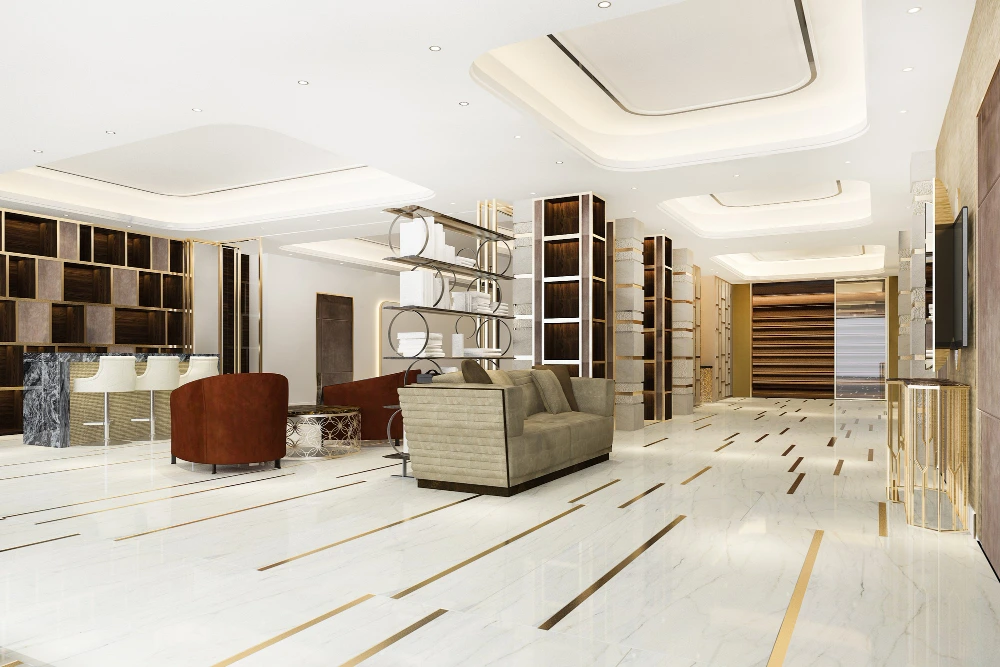
Custom hotel furniture sourcing in Dubai is one of the most complex procurement exercises in commercial design. This blog walks through the full process from initial brief and supplier shortlisting to sample approvals, quality control, logistics, and installation explaining what experienced procurement teams do differently, what mistakes first-timers typically make, and how to build a supplier relationship that delivers both on opening day and across the full operational life of a property.
Dubai’s hospitality market operates at a scale and standard that few cities in the world can match. With hundreds of hotel openings, refurbishments, and repositioning projects active at any given time, and a guest base with some of the highest expectations on the planet, the procurement of custom hotel furniture dubai is a high-stakes exercise that directly shapes a property’s competitive positioning. Get it right and guests feel the investment in every surface they touch, every chair they sit in, every bed they sleep in. Get it wrong and no amount of marketing can compensate for furniture that looks tired, performs poorly, or fails to deliver the design intent of the project.
Yet despite its importance, the furniture sourcing process remains opaque to many in the industry particularly for developers and operators approaching their first major Dubai hospitality project. This guide demystifies the process: what it actually involves, where the complexity lives, and how experienced procurement teams approach it.
Why Custom Hotel Furniture Sourcing in Dubai Is a Distinct Discipline
Dubai’s hospitality sector has specific demands that make furniture sourcing here meaningfully different from other markets. The scale of individual properties is exceptional a single hotel project may require thousands of identical guest room pieces, hundreds of lobby and F&B chairs, dozens of banquet configurations, and specialist operational equipment. Among the most underspecified categories in initial project briefs is operational furniture: quality Housekeeping Trolleys for High-Volume Dubai Hotels and back-of-house equipment are as mission-critical to a hotel’s operational performance as the guest-facing furniture in the lobby, yet they are frequently left to the final stages of procurement when timelines are tightest and options most limited.
The design ambition in Dubai hospitality projects is also exceptional. International hotel brands, celebrity architects, and globally recognised interior designers set briefs that demand significant Creative Furniture Ideas and manufacturing sophistication. Off-the-shelf furniture from standard commercial catalogues rarely satisfies these briefs which is why bespoke hotel furniture UAE sourcing, involving custom finishes, proprietary dimensions, branded hardware, and material specifications that exist nowhere in a standard catalogue, is the norm rather than the exception for Dubai’s upper-upscale and luxury tiers.
Effective Furniture Planning for Modern Hotels in Dubai also has to account for the emirate’s specific regulatory environment: Dubai Municipality fire safety standards govern foam specifications and fabric flame-retardancy requirements for all hospitality furniture; sustainability reporting is increasingly expected by international hotel groups; and Expo-era developments introduced new standards around embodied carbon and material traceability that are now filtering into mainstream procurement briefs.
Stage One: The Brief, the Budget, and the Brand Standard
Every successful furniture sourcing exercise starts with a brief that is more detailed than most clients initially produce. The brief for hotel furniture sourcing dubai needs to capture not just the aesthetic direction which most designers provide readily but the operational parameters that determine what’s actually buildable, deliverable, and maintainable at the required scale.
Key brief elements that experienced procurement teams establish at the outset include: room count by category and configuration; furniture piece count by type and finish; brand standard compliance requirements (for flagged properties); fire and safety certification standards applicable to the emirate; delivery timeline anchored to the construction programme; budget allocation by category; and the degree of customisation required versus catalogue-sourced product. Without clarity on all of these parameters, supplier conversations are premature and the proposals received will be incomparable and ultimately unusable.
“The quality of a Dubai hotel furniture brief is a direct predictor of the quality of the furniture that eventually arrives on site. Ambiguous briefs produce ambiguous and expensive outcomes.”
Stage Two: Supplier Identification and Shortlisting
The global market for hospitality furniture suppliers dubai is large and genuinely international. Dubai projects routinely source from manufacturers in China, Italy, Turkey, India, Malaysia, and Eastern Europe alongside UAE-based suppliers depending on the product category, volume requirements, budget positioning, and timeline. Each sourcing geography has a distinct value proposition and a distinct set of risk factors that experienced procurement teams understand and manage.
Supplier shortlisting for custom hotel furniture dubai projects typically proceeds through several filters. Initial screening eliminates suppliers without verifiable hospitality references at the relevant tier and scale. Secondary screening assesses manufacturing capability does the supplier have the equipment, workshop scale, and skilled labour to produce the specified pieces at the required volume and quality level? Tertiary screening evaluates commercial viability: is the supplier financially stable, insured, and able to provide the documentation test certificates, fire compliance reports, origin declarations that Dubai municipality and brand standards require?
What to Look for in a Supplier Shortlist
When teams Evaluate Hotel Furniture Suppliers for Dubai hospitality projects, five criteria consistently separate reliable partners from risk-prone alternatives. First, verifiable delivery performance on comparable projects not just references, but specific timelines and on-time delivery rates. Second, quality management systems: ISO certification or equivalent documented QC processes. Third, sample quality: the willingness and ability to produce accurate, timely pre-production samples. Fourth, communication responsiveness and English-language capability a supplier who cannot communicate clearly and promptly will cause problems at every stage of production. Fifth, financial references and payment term flexibility appropriate to the project scale.
Stage Three: Sampling, Approvals, and the Detail That Makes or Breaks a Project
The sampling stage is where the real work of bespoke hotel furniture UAE procurement happens and where most project delays originate. A complex Dubai hotel project may require 30, 50, or even more individual furniture pieces to be sampled, reviewed, and approved before mass production can begin. Each sample represents a round of feedback, revision, re-sampling, and re-approval that can take weeks or months if not managed with discipline.
Experienced procurement teams establish a sample approval protocol at contract stage: clear timelines for sample delivery, defined feedback windows, maximum revision rounds before a cost or timeline adjustment is triggered, and a named approval authority on both the client and supplier sides. Without this protocol, the sampling process expands to fill whatever time is available usually at the expense of production lead time and the project’s opening date.
Material and Finish Approvals
Beyond furniture form approvals, material and finish approvals require equal rigour. Fabric memo samples need to be reviewed under the project’s actual lighting conditions not just in a showroom or on screen. Timber veneer and solid wood finishes vary significantly batch to batch; approved samples need to be retained as physical references throughout production. Metal finishes particularly brushed and patinated metals popular in Dubai’s luxury hotel aesthetic are notoriously difficult to replicate consistently at scale and require frequent production line checks.
Stage Four: Production Oversight and Quality Control
For large-scale Hospitality Furniture projects in Dubai, passive quality control reviewing photos and trusting supplier reports is not sufficient. The most experienced procurement teams either conduct factory visits at key production milestones or engage third-party inspection services to conduct pre-shipment quality audits at the manufacturing facility. This investment typically modest relative to total project value consistently prevents the far more costly scenario of receiving a container of non-conforming furniture on site.
Production oversight for Top Commercial Furniture Solutions at Dubai’s quality tier involves checking dimensional accuracy against approved specifications, finish consistency across batch, joint and hardware quality, upholstery standards, and packaging adequacy for international shipment. It also involves verifying that the compliance documentation fire test certificates, material declarations, origin certificates has been correctly prepared and will satisfy UAE customs and brand standard requirements on arrival.
Stage Five: Logistics, Customs, and Site Delivery
Dubai’s logistics infrastructure is world-class, but furniture importation still involves complexity that can delay or damage a project if not managed proactively. Shipment consolidation decisions whether to ship by FCL (full container load) or LCL (less than container load) affect both cost and timing significantly. Furniture from multiple suppliers is frequently consolidated in origin country, which adds a logistics coordination layer. UAE customs documentation requirements for commercial furniture imports are specific and non-negotiable; incomplete or incorrect documentation results in holds that can last days or weeks at the port.
Site delivery and installation planning is the final logistics stage and often the most underestimated. A Dubai hotel construction site operates under strict access, safety, and coordination protocols. Furniture deliveries need to be sequenced precisely with the construction programme, elevator bookings need to be confirmed in advance, and installation teams need to have reviewed room layouts and assembly sequences before arrival. Hotel Furniture Trends in Dubai increasingly favour modular and flat-pack designs that simplify site logistics without compromising the final assembled appearance a manufacturing approach that smart procurement briefs now specify explicitly.
What Experienced Procurement Teams Do Differently
The gap between a smooth Dubai hotel furniture project and a chaotic one almost always comes down to procurement process discipline rather than supplier quality. Here is what experienced teams consistently do that first-timers typically don’t:
- Start earlier than feels necessary: For a Dubai hotel opening, furniture procurement should begin 12–18 months before the opening date for fully bespoke projects, and no later than 9 months for catalogue-adjacent sourcing. Teams that start at 6 months are already compromised on either timeline, customisation, or budget.
- Separate the brief from the design: Interior designers produce the design intent. Procurement teams translate that intent into a buildable, deliverable, compliant brief. These are distinct skills, and conflating them expecting designers to run procurement or procurement teams to make design decisions creates confusion and cost.
- Build contractual protection at every stage: Purchase orders for significant hotel furniture sourcing dubai projects should include sample approval conditions, delivery milestones with penalties, quality acceptance criteria, and documentation delivery requirements as standard commercial terms. Informal agreements create exposure.
- Plan for the full furniture programme, not just the rooms: Guest rooms get the most attention in hotel furniture briefs, but F&B areas, lobbies, meeting rooms, spas, and operational areas represent a significant share of total furniture value and complexity. A strong Commercial Lobby Furniture Design brief that accounts for the lobby’s dual role as arrival experience and social hub, and specifies pieces accordingly, delivers guest impact that no bedroom furniture can replicate.
- Specify for the full lifecycle, not just the opening: Furniture that looks perfect on opening day but degrades visibly within 18 months of operation is a common and expensive failure mode. Specify materials, finishes, and construction standards with reference to the property’s anticipated operational volume and the replacement cost implications of premature wear.
Current Hotel Furniture Trends Shaping Dubai Projects
The design language of Dubai’s hospitality furniture is evolving in several clear directions that procurement teams need to understand when developing briefs and evaluating suppliers:
- Biophilic and natural material integration: Natural wood tones, stone-effect surfaces, rattan and woven accents, and warm organic textures are displacing the chrome-and-lacquer aesthetic that dominated Dubai hospitality for much of the 2010s. Hotel Furniture Trends now favour materials that create warmth and tactile interest rather than high-gloss spectacle.
- Wellness-integrated guest room furniture: Adjustable bases, ergonomic seating, integrated lighting controls, and furniture that supports stretching, yoga, and desk work equally are being specified in wellness-positioned properties as standard room features rather than suite upgrades.
- Sustainability and circularity: International hotel groups operating in Dubai are under increasing pressure from corporate sustainability commitments to specify furniture with lower embodied carbon, certified sustainable timber, recycled content, and end-of-life disassembly capability. Procurement briefs that don’t address these requirements are increasingly non-compliant with group-level standards.
- Technology integration: USB charging ports, concealed cable management, and furniture-integrated wireless charging surfaces are standard specifications in upper-upscale Dubai guest rooms. These integrations require manufacturing coordination between furniture producers and technology suppliers that needs to be managed at the procurement stage, not left to the fit-out contractor.
Final Thoughts: Process Is the Product
In the context of Dubai hotel furniture procurement, the process and the product are inseparable. The quality of the furniture that arrives on site its design accuracy, material integrity, production consistency, and on-time delivery is a direct reflection of the quality of the procurement process that preceded it. There are no shortcuts that don’t eventually surface as cost, delay, or quality compromise.
For developers, operators, and procurement teams working on hospitality furniture suppliers dubai projects at any scale, the disciplines described in this guide rigorous briefing, careful supplier evaluation, disciplined sampling, active production oversight, and logistically aware site delivery planning are what separate projects that open well from projects that open badly.
GroupOrise works with hospitality procurement teams across Dubai and the wider UAE on Hospitality Furniture supply for hotel, resort, banquet, and commercial projects. Our manufacturing capabilities spanning guest room furniture, F&B seating and tables, lobby and public area pieces, and operational equipment including Housekeeping Trolleys for High-Volume Dubai Hotels are matched by a procurement support capability designed to help clients navigate the complexities of custom specification, production oversight, and compliant delivery to UAE sites.