
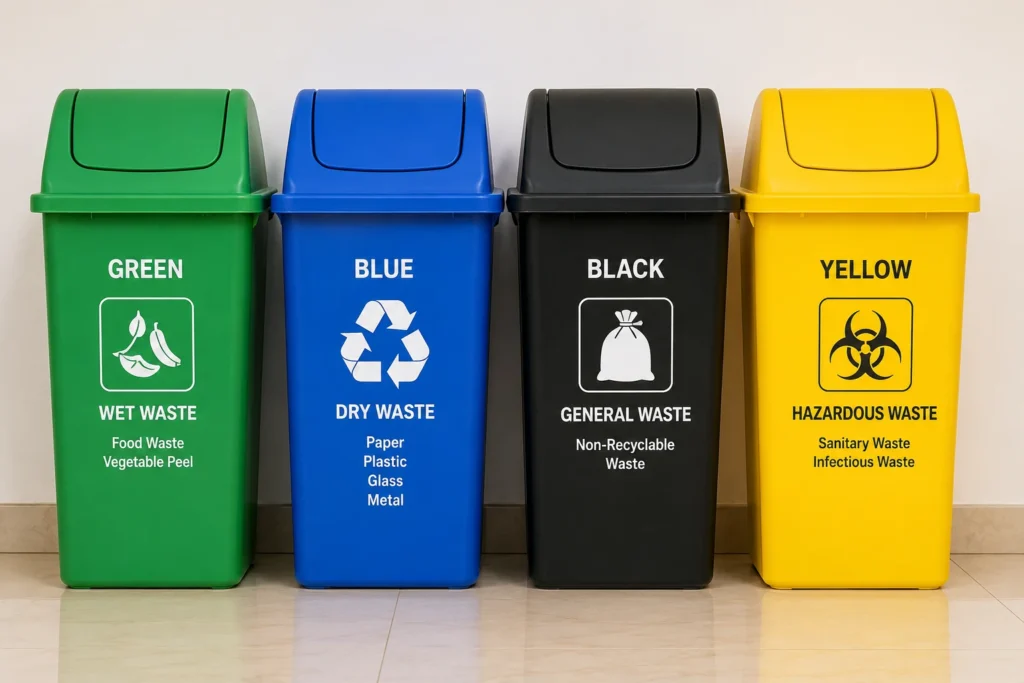
Hotels generate waste across many departments, making consistent color coding essential for hygiene and sustainability. This guide breaks down the standard bin colors, where each belongs across a property, and how to train staff so the system actually works during busy service hours.
A hotel generates a surprising volume and variety of waste every single day food scraps from the kitchen, guest room trash, banquet hall leftovers, packaging from housekeeping supplies, and occasionally biomedical or sanitary waste from spas and in-room amenities. Getting hotel waste bin color codes right isn’t just about tidiness; it’s about hygiene compliance, staff efficiency, and increasingly, a property’s sustainability credentials.
Here’s a practical guide to setting up waste segregation in hotels the right way, zone by zone.
Why Waste Bin Color Codes Matter for Hotels
Unlike a home or small office, hotels deal with waste at commercial scale, across multiple departments, with different staff handling it at different points. Without a clear, consistent system:
- Recyclable materials end up mixed with general waste, undermining sustainability efforts
- Kitchen and F&B waste gets handled incorrectly, creating hygiene risks
- Housekeeping staff waste time sorting waste after the fact instead of at the source
- Guest-facing bins look inconsistent or unclear, which reflects poorly on the property
Color coded waste bins solve this by making sorting instinctive staff and guests alike learn to associate a color with a waste type, and that association holds up even during busy periods when there’s no time to think twice.
The Standard Color Code for Hospitality Waste
While regulations vary slightly by country, most hospitality properties follow a version of this system:
Green Wet / Organic Waste
Used for food scraps, vegetable peels, and organic waste from kitchens, restaurants, and banquet halls. This is typically the highest-volume bin in any hotel with in-house dining, and it’s a strong candidate for composting programs if the property has the space and process for it.
Blue Dry / Recyclable Waste
Paper, cardboard, plastic packaging, glass, and metal cans go here. Blue bins are essential near reception, offices, guest corridors, and back-of-house storage areas where packaging waste accumulates constantly.
Black General or Rejected Waste
Anything that doesn’t clearly belong in wet or dry categories, along with non-recyclable rejected waste, goes into black bins. These are common throughout guest floors and public areas as a catch-all alongside the primary color-coded pair.
Yellow Biomedical or Sanitary Waste
Relevant mainly for hotels with spas, wellness centers, or in-house clinics, yellow bins handle used gloves, bandages, and other sanitary or medical waste that must never mix with regular waste streams.
Following waste disposal color codes consistently across all these categories keeps a property compliant with local municipal waste rules and makes eventual audits or sustainability certifications far easier to pass.
Where Each Bin Belongs Across the Property
Guest Rooms
A single small indoor waste bin per room is usually enough, though some properties now provide a second small recycling bin for paper and packaging, especially in eco-conscious or business-focused hotels.
Restaurants, Bars & Banquet Halls
This is where hotel waste management gets busiest. Green bins for food waste need to be placed close to service stations and buffet counters, with blue bins nearby for packaging and glass from bar service.
Kitchens and Back-of-House
Kitchen staff need fast, obvious sorting color-coded bins at prep stations reduce the chance of food waste and recyclable packaging getting mixed during high-pressure service hours.
Lobbies and Public Areas
Guest-facing bins should be clearly labeled and visually consistent with the rest of the property’s design, since these are the bins guests interact with directly and form part of their overall impression of the hotel.
Housekeeping and Laundry Areas
Back-of-house waste from housekeeping trolleys and laundry operations tends to be higher-volume and needs larger-capacity bins that can be emptied efficiently without disrupting room turnover schedules.
Staff Training Matters as Much as the Bins Themselves
Even a well-designed color-coding system fails if staff aren’t trained to use it consistently. A few practical steps help:
- Include waste segregation in onboarding for housekeeping, F&B, and kitchen staff, not just a one-time briefing
- Post simple, visual signage near every bin cluster, especially in high-turnover back-of-house areas
- Assign accountability to a department head for spot-checking segregation compliance periodically
- Review and refresh training whenever new bins or waste categories are introduced
Choosing the Right Bins for Your Property
Not all bins are built for hotel-scale use. When sourcing from Hotel Dustbin Manufacturers and Suppliers, look for:
- Durable, easy-to-clean materials that hold up to daily commercial use
- Pedal-operated or touchless options for guest-facing and kitchen areas, which support better hygiene
- Consistent color availability across bin sizes, so a property can maintain its system from small room bins to large back-of-house units
- Outdoor-rated bins for loading docks, staff areas, and exterior waste points that need to withstand weather exposure
A property furnishing an entire waste management system from small guest-room bins to large outdoor units benefits from sourcing everything from one manufacturer, ensuring color consistency and matching finishes throughout.
Waste Management as Part of a Bigger Hospitality Furniture Strategy
Waste bins are often an afterthought in hotel design, but they’re increasingly part of how properties present themselves. As Hotel Furniture Trends shift toward sustainability-conscious design, well-integrated, clearly color-coded waste stations are becoming a visible signal of a property’s environmental commitment, not just a back-of-house necessity. Pairing the right bins with the rest of a property’s Hospitality Furniture from banquet chairs to housekeeping trolleys creates a more cohesive, professional look across guest-facing and operational areas alike.
Final Thoughts
Getting waste bin color codes right in a hotel isn’t complicated, but it does require consistency the right colors, in the right places, backed by staff training that keeps the system working during busy periods. Done properly, it improves hygiene, supports sustainability goals, and even shapes how guests perceive a property’s attention to detail.
For hotels planning a waste management upgrade or a full operational furniture refresh, Group Orise supplies commercial-grade, color-coded bins and hospitality furniture built specifically for properties that need to get this right at scale. Reach out to the team for a custom quote.
Frequently Asked Questions
How many waste bins does a hotel typically need per room?
One indoor waste bin per guest room is standard, though many properties now add a second small bin for recyclables as part of broader sustainability efforts.
Do all countries follow the same waste bin color codes?
The core logic green for wet/organic, blue for dry/recyclable is widely used, but exact color rules can vary by country and local municipal regulation, so it’s worth checking regional waste management guidelines before finalizing a property-wide system.
Should outdoor and indoor bins use the same color system?
Yes, keeping the color coding consistent between indoor and outdoor bins avoids confusion for both staff and guests, and makes it easier to train new employees quickly.
Can existing hotels retrofit a color-coded system without a full renovation?
Absolutely most properties can introduce color-coded bins and signage in phases, starting with high-traffic areas like kitchens and restaurants before extending the system to guest rooms and back-of-house zones.