
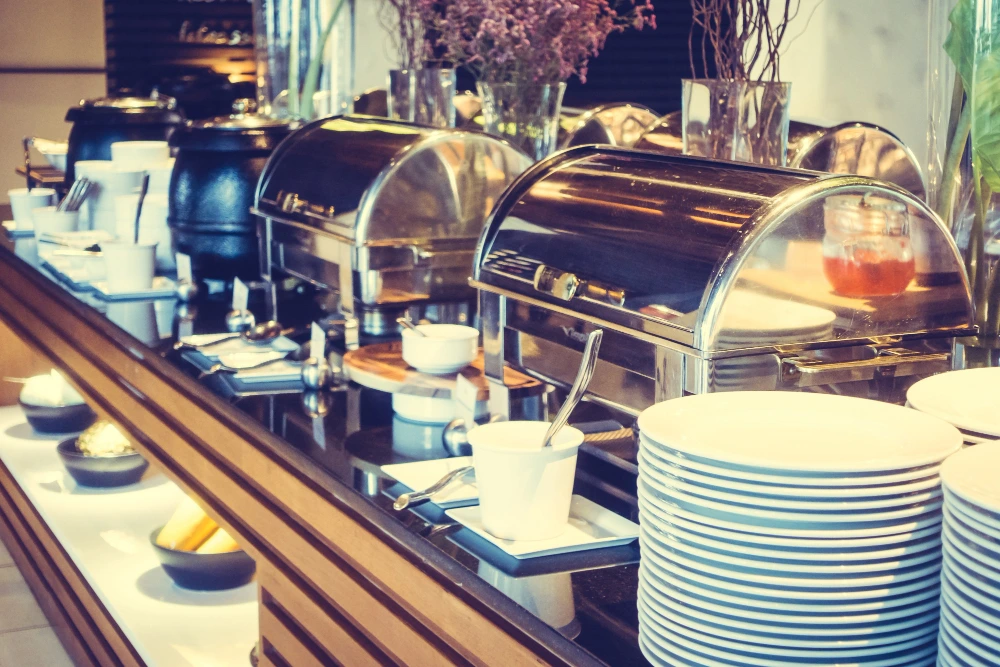
A well-designed buffet layout plays a crucial role in improving guest flow and dining comfort in hotels and restaurants. From efficient buffet counter design to smart buffet station layout, thoughtful planning reduces congestion and waiting time. Understanding different types of buffet stations helps create smooth, enjoyable dining experiences. A proper buffet setup ultimately enhances guest satisfaction and operational efficiency.
In hotels and restaurants, a buffet is more than just a food display it is an experience. Guests may not remember every dish they eat, but they will remember how comfortable or chaotic the buffet felt. Congested counters, unclear food sections, and poor circulation can turn even the best menu into a frustrating experience. This is why thoughtful Buffet Layout and Design Solutions to Improve Guest Flow in Hotels & Restaurants are essential.
A well-planned buffet encourages smooth movement, reduces waiting time, and allows guests to enjoy food without stress. From smart buffet counter design to well-organized buffet station layout, every element plays a role in shaping guest satisfaction. With modern hospitality standards rising, hotels and restaurants must treat buffet planning as a core operational strategy, not an afterthought.
Why Buffet Layout Matters in Hospitality Spaces
Buffets often serve a large number of guests within limited time frames breakfast rushes, lunch hours, or event catering. Without proper planning, bottlenecks form quickly.
A good buffet setup helps:
- Improve guest flow and reduce crowding
- Shorten waiting time
- Increase food accessibility
- Enhance overall dining experience
Hotels especially rely on an efficient hotel buffet station to manage high volumes while maintaining comfort and hygiene.
Understanding Guest Flow in Buffet Areas
Guest flow refers to how people move through the buffet from entry point to exit. Poor flow leads to confusion, overcrowding, and discomfort.
An effective buffet station layout considers:
- Entry and exit points
- Direction of movement
- Spacing between counters
- Accessibility for all guests
A thoughtfully designed Buffet Station allows guests to move naturally without needing instructions or signage overload.
Core Principles of Buffet Counter Design
1. Clear Food Segmentation
Guests should immediately understand where to start and what comes next. Breakfast items, mains, sides, and desserts should follow a logical order.
A smart buffet counter design avoids mixing hot and cold foods randomly. Clear segmentation keeps guests moving forward smoothly.
2. Comfortable Counter Height and Depth
Counters should be accessible to all guests, including children and elderly diners. Overly deep counters force guests to lean, slowing movement.
Professional buffet setup focuses on ergonomics as much as aesthetics.
3. Durable and Hygienic Materials
Buffets face constant use. Surfaces must be easy to clean and resistant to spills, heat, and scratches.
Hotels often work with commercial suppliers to ensure the hotel buffet station meets hygiene and durability standards.
Buffet Station Layout: Planning for Smooth Movement
A successful buffet station layout guides guests naturally. The goal is to avoid cross-traffic where people move in opposite directions.
Popular layout approaches include:
- Linear layouts for narrow spaces
- Island layouts for large dining areas
- Parallel stations for high guest volume
Each Buffet Station should allow guests to serve themselves without blocking others.
Types of Buffet Stations and Their Uses
Understanding the Types of Buffet Stations helps in choosing the right design for your space.
1. Linear Buffet Station
This is the most common type. Food is arranged in a straight line, ideal for smaller spaces and predictable guest flow.
2. Island Buffet Station
Placed at the center of the dining area, island stations allow access from all sides. They work best in large hotels with high traffic.
3. Action or Live Cooking Stations
These stations create engagement and excitement. However, they need extra space to avoid crowding.
4. Beverage Stations
Separating beverages from food stations reduces congestion. This is a crucial tip in effective buffet setup planning.
Each of these Types of Buffet Stations serves a different purpose and should be chosen based on guest volume and dining style.
Hotel Buffet Station Design Considerations
Hotels face unique challenges due to high guest turnover and limited dining hours. A well-planned hotel buffet station must handle peak traffic efficiently.
Important considerations include:
- Multiple access points
- Separate counters for popular items
- Easy staff access for refilling
Modern hotels often use modular Buffet Station designs to adjust layouts based on occupancy.
Buffet Setup for Restaurants vs Hotels
While hotels prioritize volume and speed, restaurants focus more on presentation and experience.
Restaurant buffet setup often:
- Emphasizes aesthetics and food display
- Uses fewer but more curated stations
- Encourages relaxed pacing
Hotels, on the other hand, rely on structured buffet station layout to manage crowds effectively.
Common Buffet Layout Mistakes to Avoid
Even visually appealing buffets can fail if flow is ignored. Common mistakes include:
- Placing popular items too close together
- Narrow walkways between counters
- Mixing entry and exit points
- Poor lighting around food areas
Avoiding these errors improves the effectiveness of both buffet counter design and guest satisfaction.
Role of Signage and Visual Cues
Subtle visual guidance helps guests move confidently. Signs, menu labels, and floor cues reduce hesitation.
Good signage supports:
- Faster decision-making
- Reduced congestion
- Clear direction
This complements the physical buffet station layout and improves the overall buffet setup.
Accessibility and Guest Comfort
Inclusive design matters. Buffets should be usable by guests with mobility challenges.
Consider:
- Wider aisles
- Lower counters in some areas
- Clear visibility of food items
A thoughtfully designed Buffet Station ensures comfort for all guests, not just speed.
Lighting and Ambience in Buffet Areas
Lighting affects how food looks and how guests feel. Warm lighting enhances presentation, while adequate brightness ensures safety.
Good lighting enhances:
- Food appeal
- Ease of movement
- Cleanliness perception
It is an often-overlooked part of buffet counter design.
Maintaining Efficiency During Peak Hours
Peak hours test any buffet layout. Smart planning helps maintain order.
Hotels often:
- Duplicate popular items across multiple stations
- Use separate hotel buffet station counters for high-demand foods
- Keep refill paths hidden from guest movement
These strategies improve flow without expanding space.
Future Trends in Buffet Station Design
Modern hospitality is shifting toward flexibility and hygiene.
Emerging trends include:
- Modular buffet units
- Touch-free serving elements
- Clearly separated Types of Buffet Stations
- Sustainable materials
These innovations redefine how buffet setup works in modern hotels and restaurants.
Final Thoughts
An efficient buffet is not accidental it is designed. Thoughtful Buffet Layout and Design Solutions to Improve Guest Flow in Hotels & Restaurants enhance comfort, reduce stress, and elevate dining experiences.
By focusing on smart buffet counter design, choosing the right Types of Buffet Stations, and planning an intuitive buffet station layout, hotels and restaurants can serve guests smoothly even during peak hours. A well-executed hotel buffet station reflects professionalism, care, and attention to detail qualities guests always remember.