
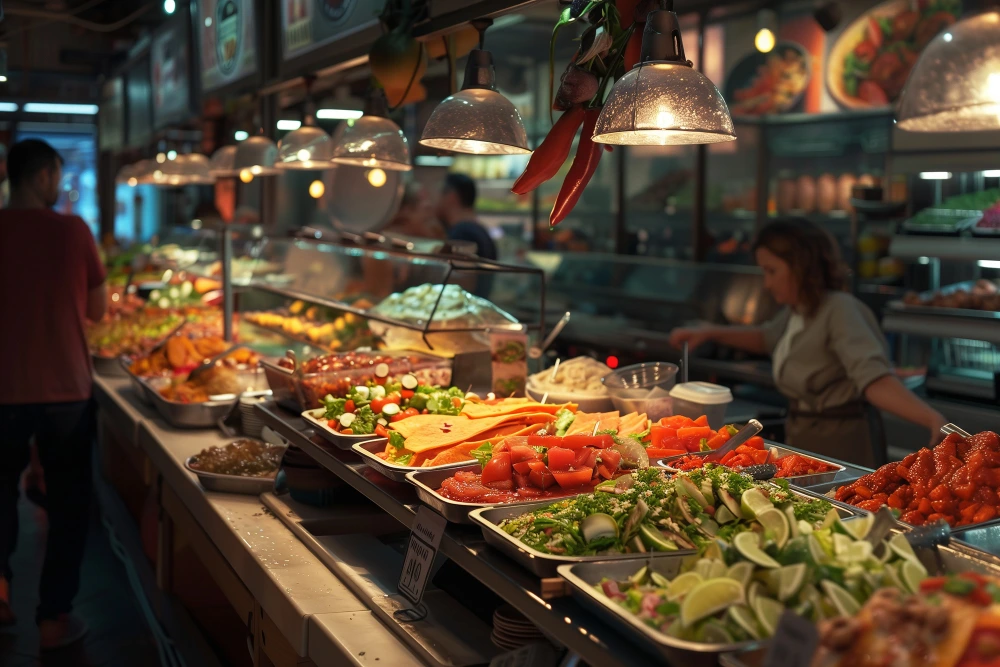
A well-engineered buffet station design for hotels is far more than a surface to hold food; it is a precision-planned system that controls guest flow, maintains food quality, reinforces brand atmosphere, and defines the operational efficiency of an entire banquet. This blog explores every critical dimension of buffet layout planning for large-scale hospitality events, from the Types of Buffet Stations available to the role of commercial buffet counters and how the right hospitality furniture manufacturer partnership brings it all together. Whether you are planning a 200-guest corporate dinner or a 600-cover wedding reception, this guide delivers the practical framework you need.
In large-scale hotel banqueting, the buffet station is the operational heart of the dining experience. It is the moment where design intent meets guest reality where hundreds of people interact simultaneously with the food, the space, and the property’s brand identity, all at once.
When a buffet station design for hotels is executed well, guests move fluidly through the service sequence, food is presented beautifully and maintained safely, staff operate without bottlenecks or collisions, and the entire room retains its atmosphere even at peak service intensity. When it is poorly designed, the consequences cascade: queues form and stall, food temperatures drop, staff movements conflict with guest flow, and the elegance of the event is replaced by frustration and delay.
The difference between these two outcomes is almost entirely determined by deliberate design the intelligent selection of commercial buffet counters, the strategic application of buffet layout planning principles, and the quality of the furniture and equipment that supports it all. This guide explains how to get every dimension of that design right.
Understanding the Types of Buffet Stations
Before planning layout, dimensions, or equipment, the foundational decision is identifying which of the Types of Buffet Stations your event requires. Each station type carries distinct operational implications and spatial requirements.
The Single-Line Station is the simplest configuration a continuous run of counters or tables along which guests progress from plates to proteins, sides, and condiments in a single direction. It is well-suited to events of up to 100 guests where space is constrained, but it creates a predictable bottleneck at scale. A 300-cover dinner with a single-line setup will generate queues that frustrate guests and compress service timing far beyond acceptable limits.
The Double-Sided Station resolves the capacity problem of the single line by pulling counters away from walls and allowing guests to serve themselves from both sides simultaneously. This effectively doubles throughput within the same footprint a critical design move for any event exceeding 150 guests. Hotel buffet setup ideas that incorporate double-sided flow consistently outperform wall-aligned configurations in both service speed and guest satisfaction. The key requirement is adequate aisle clearance on both sides: a minimum of 150 centimetres of open space around the perimeter of the station to allow simultaneous serving, guest movement, and safe staff access for replenishment.
The U-Shaped Station uses three connected counter runs to form an enclosed service arc. This configuration is particularly effective for themed or segmented menus appetisers on one arm, main courses at the base, desserts on the other giving guests a clear, intuitive progression through a curated culinary journey. The U-shape also creates a natural backstage area within the enclosed section, allowing staff to restock and refresh dishes discreetly without entering the guest-facing service zone.
The Island or Circular Station places a central counter formation in the middle of a room, allowing guests to circulate freely around all sides. This layout suits social, standing-format events or high-energy receptions where mingling and movement are as important as the food itself. It works particularly well as a standalone dessert or cocktail station within a larger banquet environment, drawing guests toward a focal point and dispersing them naturally back into the room.
The selection of station type should always be driven by three variables in combination: guest count, available floor area, and the service sequence your menu requires.
Commercial Buffet Counters: The Structural Foundation
The physical quality of commercial buffet counters is the single most consequential material decision in any hotel buffet design. Unlike event rental furniture, commercial counters used in a hotel banqueting environment must perform reliably across hundreds of events per year, withstand the thermal stress of chafing dishes and heat lamps, support significant static loads without deflection, and maintain their aesthetic finish throughout an extended operational life.
Surface integrity is the primary specification concern. Commercial buffet counters for hotel use should be constructed from materials that resist warping under sustained heat exposure, are easy to clean without surface degradation, and provide a stable, level platform for chafing equipment. Stainless steel is the industry standard for hot food zones it is hygienic, thermally stable, and visually appropriate for professional food service environments. Wooden surfaces, where used for ambient temperature presentations such as salad stations or bread displays, must be finished with food-safe, moisture-resistant treatments to maintain hygiene and appearance.
Counter height is another critical specification that is frequently underestimated. Standard service height for a stand-up buffet is approximately 90 centimetres comfortable for the majority of adult guests to serve themselves without hunching or overreaching. Where stations incorporate elevated risers or tiered display elements for visual interest, ensure that the highest tier remains within a comfortable arm-reach for standing guests. A beautifully styled station that guests cannot comfortably serve from defeats its own purpose.
The structural base of commercial buffet counters must be engineered for commercial load-bearing requirements. A fully laden banquet buffet station with multiple chafing dishes, ceramic serve ware, decorative elements, and signage can impose significant weight on the counter surface and supporting frame. Specify load ratings explicitly with your hotel furniture manufacturer before committing to any production order.
Buffet Layout Planning: The Principles That Drive Guest Flow
Excellent buffet layout planning is fundamentally the science of managing human movement through a high-density food service environment. Every design decision should be evaluated through the lens of guest flow: how does this choice affect the speed, comfort, and safety of guests moving through the service sequence?
Sequencing food categories correctly is the starting point. The optimal buffet progression moves guests through plates and bowls first, then salads and cold dishes, then hot mains and proteins, then condiments and accompaniments, and finally cutlery and napkins at the very end. Placing cutlery at the start is one of the most common and damaging layout errors in hotel buffet design the moment a guest picks up a fork and knife, their ability to serve themselves comfortably is dramatically reduced. Placing cutlery last keeps both hands free throughout the service experience, increasing both throughput and guest comfort.
Separating the protein station is another high-impact layout principle. Carved meats, interactive live stations, and individually portioned proteins are the primary bottlenecks in any buffet service, because guests pause, deliberate, and interact with staff. Pulling these stations to a separate dedicated counter or node away from the main buffet line prevents a localised slowdown from becoming a whole-room queue. Guests who have completed their salad and side selections can continue moving while others engage with the carving station a simple spatial decision with significant service velocity implications.
Creating a dedicated beverage satellite is equally important for large-scale events. Placing beverages at the end of the food line forces guests to balance a full plate while managing a drink an ergonomic challenge that slows service and creates spillage risk. A separate beverage station positioned 3–5 metres from the food buffet distributes guest movement across more of the room, reduces congestion at the main service area, and gives the beverage presentation its own moment of visual focus.
Ensuring staff replenishment access that does not conflict with guest movement is the operational design principle most often neglected in initial planning. Staff carrying hot, heavy pans of food should approach and exit the buffet station from clearly designated service points ideally the narrow end caps of counter runs rather than the guest-facing service lanes. A dedicated staging counter behind or adjacent to the buffet, where staff can swap empty for full pans before approaching the service line, prevents the most dangerous and disruptive collision scenario in live banquet service.
Hotel Buffet Setup Ideas: Elevating Presentation Without Compromising Function
The best hotel buffet setup ideas strike a deliberate balance between visual ambition and operational practicality. A buffet station in a hotel environment is simultaneously a food service system and a branded design statement it must function perfectly under pressure while contributing to the aesthetic identity of the event and the property.
Tiered display levels add visual dynamism to any buffet station, creating a sense of abundance and considered curation rather than flat, uniform presentation. Risers, display plinths, and elevated serve ware create depth and visual interest, but must be positioned so they do not obstruct guest access to dishes at the rear of the counter. Rule of thumb: taller elements at the back, lower presentations at the front, with clear visual and physical access to every dish from the guest-facing side.
Station theming and signage are increasingly important differentiators in hotel banqueting, particularly for large weddings and corporate events where multiple cuisine stations may be operating simultaneously. Clear, well-designed dish labelling including allergen and dietary information is both a practical necessity and a brand-quality signal. Guests with specific dietary requirements rely on accurate signage, and its quality reflects directly on the professionalism of the property.
Lighting transforms the buffet station experience, particularly for evening events. Warm, directional lighting over a food station makes dishes look more appealing, creates an atmosphere of warmth and sophistication, and distinguishes the buffet zone as a deliberate design focal point within the larger room. LED strip lighting beneath counter overhangs or in base plinths can add a modern, premium quality to the overall Buffet Layout and Design Solutions you implement.
The Role of a Hospitality Furniture Manufacturer in Buffet Station Design
Achieving a genuinely high-performance hotel buffet station is not a task that can be accomplished through off-the-shelf procurement alone. The specific dimensions, material specifications, modular configurations, and aesthetic integration required by a hotel banqueting environment consistently demand a partnership with a specialist hospitality furniture manufacturer who understands the unique requirements of large-scale food service design.
A capable hospitality furniture manufacturer brings technical expertise in commercial-grade surface specifications, structural load engineering, modular counter configurations that adapt to different room shapes and event sizes, and finish quality that holds up across intensive year-round use. They should be able to work from your event manager’s or interior designer’s brief, propose configurations that align with your buffet layout planning requirements, and deliver solutions that meet both operational and aesthetic standards simultaneously.
The relationship between a hotel and its furniture manufacturer for banquet infrastructure is a long-term one. Counter systems purchased today will serve the property for a decade or more. Investing in the right partnership from the outset with a manufacturer who understands the intersection of design, durability, and food service performance is one of the highest-return decisions a hotel banqueting team can make.
Conclusion: Design the Station, Command the Event
A great hotel banquet begins long before the first guest arrives. It begins in the design phase with intelligent buffet station design for hotels that anticipates guest behaviour, supports staff efficiency, maintains food quality, and communicates the property’s commitment to excellence through every physical detail.
From selecting the right Types of Buffet Stations and specifying the correct commercial buffet counters, to applying disciplined buffet layout planning principles and sourcing from the right hospitality furniture manufacturer every decision in this chain contributes to the outcome guests actually experience.
At Grouporise, we bring deep expertise in hospitality furniture design and commercial banquet infrastructure to every project. Our Buffet Layout and Design Solutions are engineered for the demands of large-scale hotel banqueting combining structural performance, operational intelligence, and the visual quality your guests expect and your brand deserves.